

Tax Time Scams: Beware of ‘Accidental’ Deposits from the IRS
“YEAH for tax time!” - Said no one ever. After years of agonizing tax preparation, you might think the universe is finally in your favor when you notice a surprise $20,000 pop up in your bank account. But before you book that vacation to Ibiza or run to the car dealership, pause and remember what you know to be true:...
Read More
A.I. Deepfake Posing as the CFO Scams $25 Million: How to Protect Your Organization from the Exploding Deepfake AI Cyber Scam
Deepfakes use Artificial Intelligence (A.I) to create fake, hyper-realistic audio and video that is generally used to manipulate the viewer’s perception of reality. In most deepfakes, the legitimate person’s face or body has been digitally altered to appear to be someone else’s. Well known deepfakes have been created using movie stars and even poorly produced videos of world leaders. Removing...
Read More

John Sileo Lost Nearly Everything to Cybercrime
John’s Story of Loss Inspires Organizations to Take Action John Sileo lost his multi-million-dollar startup, his wealth, and two years of his life to cybercrime. It began when a hacker electronically embezzled from the company’s clients using John’s identity. John was initially held legally and financially responsible for the felonies committed. The losses not only destroyed his company and decimated...
Read More

Cybersecurity Keynote Speaker John Sileo Video
Fear alone is not enough to engage your audience to make changes to their personal and professional cybersecurity posture. In my presentations, I like to use a healthy dose of humor, audience interaction, wow moments (like a live smartphone hack), my own personal story of losing everything to cybercrime and any means to make this crime personal to the audience....
Read More

How Hackers Use A.I. to Make Fools of Us (& Foil Security Awareness Training)
In a bit of cybercrime jujitsu, A.I.-enabled hackers are using our past security awareness training to make us look silly. Remember the good old days when you could easily spot a phishing scam by its laughable grammar, questionable spelling and odd word choice? “Kind Sir, we a peel to your better nurture for uhsistance in accepting $1M dollhairs.” Or how...
Read More

John Sileo Live-Hacks an Audience Smartphone (Video)
Why do I perform a live hack during my cybersecurity keynote speeches? Here's what I have found giving cybersecurity keynotes for the past two decades - if you don't interact with your audience, if you don't keep them laughing while they are learning, they won't stay engaged and they will forget everything they have learned when the lights come back...
Read More
Cybersecurity Habits Meet Neuroscience
Hack your cybersecurity habits to avoid being hacked! The human element of cybersecurity is the most overlooked and underused tool for data protection. People are our strongest line of defense. In other words, your employees are your greatest asset in the fight against cybercrime, but only if you train them to be. By fortifying data at its source –us– we...
Read More

Security by Design in a Tesla Driven World
When my daughters were younger, they took it upon themselves to invent the first flying car. This included drawing designs, testing out ways to fly (plastic bags and cardboard wings were, sadly, ruled out), and brainstorming stoplight systems for the sky. From that day forward, I knew that innovation (flying cars) and protection (stoplights in the sky) could and should...
Read More

A Breakup Letter to Bad Cybersecurity Habits (Featuring Makayla Sileo)
Cybersecurity habits are a lot like dating - you have to weed out the bad to make room for the good. As we approach National Cybersecurity Awareness Month and my busiest speaking season, my radically creative daughter Makayla (💜) wrote a series of Breakup Letters to all of the bad cybersecurity habits that lead to huge organizational losses and reputational...
Read More

Why Is Cybersecurity Awareness Training Important?
Why is cybersecurity awareness training important? Just as ships rely on lighthouses to steer clear of dangerous rocks, organizations need cybersecurity awareness training to protect their digital assets. By illuminating threats lurking in the dark, awareness training equips employees with the knowledge they need. As a lighthouse provides illumination for navigation, trainings light the way for employees, executives and...
Read More

Travel Phishing: If It Seems Fishy, It Might Actually Be Phishy
It is summertime which means that the beach is calling. Unfortunately, so are travel phishing scammers. The change in season brings an influx of travel-based scams and unfortunately, our eagerness to book the next vacation is making us more vulnerable to fraud. If there is one thing we know about humans, it is that we love bargains. Especially when it...
Read More

How Has Cybersecurity Evolved in 2023?
How has cybersecurity evolved? What are the future trends in the industry? The game of cat and mouse “played” by defenders and attackers will continue to drive the evolution of cybersecurity. The game is ongoing, with each side adopting and adapting the strategies and tactics of the other. In this article, we will explore how cybersecurity has evolved and...
Read More

Cybersecurity: Why Is it Important?
With cyberattacks on the rise, more organizations are coming to understand why cybersecurity is important to their bottom line. It is essential for businesses of all sizes to use robust cybersecurity best practices to protect their systems, networks, and data. Let’s dive into why cybersecurity is so important for businesses to prioritize. Cybersecurity: Why Is it Important to Organizations?...
Read More

The Best Cybersecurity Training for Employees
There’s a saying among cybersecurity professionals that humans are the weakest link. Luckily, this is only true if you treat them that way. If you train your people effectively, they become the vanguard in your cybersecurity defenses. To achieve this, you need the best security training for employees. The Best Cybersecurity Training for Employees Includes Interactive Learning Types...
Read More

2023 Trends in Cybersecurity
Cybersecurity is a never-ending game of chess in which players constantly try to outsmart each other. The cybersecurity chessboard is constantly shifting, and new threats emerge every day. To stay one move ahead of cybercriminals, you need to understand the fast-moving trends in cybersecurity. Trends in Cybersecurity to Watch For in 2023 and Beyond Trends in Cybersecurity Trend Problem Solution...
Read More

The Importance of Cybersecurity in Business
In today's interconnected age, the importance of cybersecurity in business can’t be overestimated. A business with inadequate cybersecurity is like a car without seat belts, airbags, and a well-trained driver. It may run accident-free for a while, but it will ultimately lead to a devastating and costly crash. Without proper cybersecurity measures, a business can be left vulnerable to a...
Read More

Cybersecurity Awareness Month 2023
We like to think of Cybersecurity Awareness Month almost like a yearly booster shot; just like we need boosters to protect ourselves from the changing threat posed by viruses, we need Cybersecurity Awareness Month 2023 to reinoculate ourselves and our employees against ever-evolving cyber threats. What Is Cybersecurity Awareness Month? Held every October since 2004, Cybersecurity Awareness Month is a...
Read More

ChatGPT: What is Generative AI & Why Does it Matter? (As Explained by a Bot)
ChatGPT is a Type of Generative AI (and this post is an example) (The best way to understand ChatGPT and Generative AI is to show what it can do. So, everything below this line was written by ChatGPT based on the prompt "Write an article about Generative AI and ChatGPT that explains what it is and how it can be...
Read More
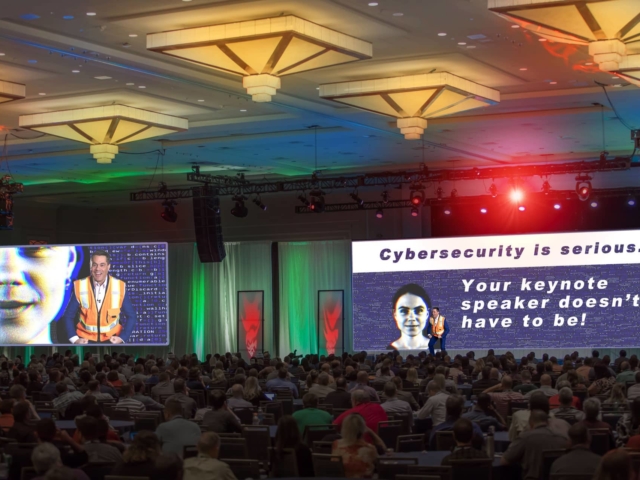
Top 5 Cybersecurity Keynote Speakers for Your Event
Cybersecurity Keynote Speakers are in High Demand Cybersecurity is a critical issue for businesses and organizations of all sizes and industries and it is more important than ever to stay informed and educated on the latest threats and best practices for protecting sensitive information. One of the best ways to do this is by attending conferences and events where top...
Read More
Lastpass Breach: What to Do About It
How to Protect Yourself & Your Wealth from the LastPass Hack You may have already heard about the LastPass breach, victimizing one of the leading password management programs, not once, but twice in the past few months. LastPass recently updated information about the two breaches in a letter to users on the LastPass website. The First LastPass Breach Leads to...
Read More
Look no further than John Sileo. He will keep your audience on the edge of their seats.

To book John for your next event call 303.777.3221 or fill out the contact form.